Showing posts with label chairman mao. Show all posts

Sunday, July 1, 2012

Day 6: Wuzhen, Chairman Mao and Hot Pot


We left Hangzhou in the morning to start the long drive back to Shanghai. On the way we stopped in a small town called Wuzhen. Wuzhen is home to only 60,000 people and has a history of over 1300 years. It’s a big tourist attraction because it has one of the best preserved sites for people to see how the village lived for hundreds of years until modern times. 


There’s an old medicine shop with pots on the wall. They explained when people were sick they would go to the pharmacist who would check their pulse, eye color, tongue then ask about their dreams and other symptoms and from that would be able to diagnose the problem. We walked through an old winery shop and saw how traditional rice wine was made. We even got to taste some though I wish we hadn’t. It tasted like vomit, it was disgusting. Smelled bad too. They also had a dye factory where they specialized in a local blue dye they would use for clothing, quilts and just about everything. As we walked through the village there were scenes of the ways of the old life, models showing a traditional wedding scene, figurines depicting old legends, cases containing traditional clothing and pictures of people celebrating holidays and working in the fields.

Barrels of rice wine
Turns out China was a hard place to live in the last century leading up to modernization. The country was always at war and the land was controlled by warlords. The simple farmers were little more than slaves on the lands that they worked. In the 1920’s the communist party under the direction of Chairman Mao took over China. They unified the country and privatized the land. Every farmer was given their own piece of land and resources to help them create a better future. Women were given higher status, the homeless were given homes, and children were sent to schools in greater numbers than ever before. The old generation, still to this day, remember those great acts and still love and give thanks to Mao for those deeds. However, the younger generation and most other people around the world remember Mao for the destruction that he caused. He persecuted the rich and the educated, millions of people were executed or starved to death under his attempts to move the country forward, and under the cultural revolution he destroyed countless artifacts the people held dear. Mao passed in 1976, things calmed and in 1978 the movement to open up China to the rest of the world began.

China is a very polarized country. In the big cities of Shanghai and Beijing you can find towering sky scrapers and immense wealth. But if you drive just a couple miles outside the city you find farmers working their fields by hand just as it was done hundreds of years ago. It’s like the country tried to jump straight from third world to first and much of it hasn’t quite caught up yet.

When we returned to Shanghai that night we were treated to a special dinner called Hot Pot. Each seat at the table had its own bowl of boiling water and the food was brought out raw and uncooked so we got to pick what we wanted and cook it right in front of us! The meat and everything was thin so they would cook up in just two or three minutes and it was great because every bite was hot and fresh. We were also given stylish bibs to wear while we dined on our own creations. Clearly all foreigners are slobs and pigs because no one else in the restaurant had the aprons on, but that’s okay because we recognized the fact that we are slobs and pigs sometimes. It was a fun evening. 

Saturday, June 23, 2012

Day 14: Flying Tigers and Welcome to Dazu!


We got out half day tour of Chongqing. For being one of the largest cities in the world it sure didn’t have much to do. We started the day with a stroll through the park. There were tons of older people doing tai chi and morning exercises. There was a nice lookout of the city. We saw the original house of the first Australian Embassy in China.

I take it back, if you’re a war history nerd then Chongqing is probably your place to go. The city was a major landmark during World War II. After the park we visited the Flying Tiger museum which was all about the war efforts during that time. Flying Tigers was the code name given to the air force mission in Chongqing against the Japanese. The museum is inside the house that was used by the American military and is a common place to film movies from that era. They were actually shooting a TV show while we were there, we didn’t see any of the filming but the 1920’s cars were there and a small screw doing busy work around the set. There were a few rooms of pictures and a nice lady gave us a short presentation about the Flying Tigers, then after that we were herded through the galleries of unrelated paintings being sold to support the museum. Exploited tourists GO!

Our last stop in Chongqing was the public square in between the Three Gorges Museum and the government building that is hailed as one of the triumphs of modern architecture. We didn’t have time for the museum and we weren’t allowed inside the government building. We just got to look at them.

Government building in Chongqing

After lunch we drove 2 hours to Dazu. Now there’s a city with things to see! It only had 900k people but in the surrounding around it is home to more than 50,000 rock carvings dating back to 700AD. We had time for one mountain that afternoon. It had several hundred religious pictures carved straight into the rock side, almost all of them created in the Tong and Song dynasties between 800 and 1200AD. Many of the carvings there had their heads and hands knocked off. A result of the cultural revolution under Chairman Mao. All religious symbols had tried to be destroyed but it’s hard to destroy solid rock so the best they could do was knock off the head and hands. They were fantastic though, huge life size figures meticulously hand carved surviving through hundreds of years.

Dazu Rock Carvings

The hotel we stayed at in Dazu was by far the most impressive of our entire trip. It was a 5 star and for good reason. It was massive, it was gorgeous, it was decked out to the nines. Our room was huge and the best part of it all….inside the bathroom there was a switch next to the toilet that you could use to turn music on while you did your business. Best feature ever. 

Wednesday, June 13, 2012

Day 23: Tiananmen Square and Forbidden City


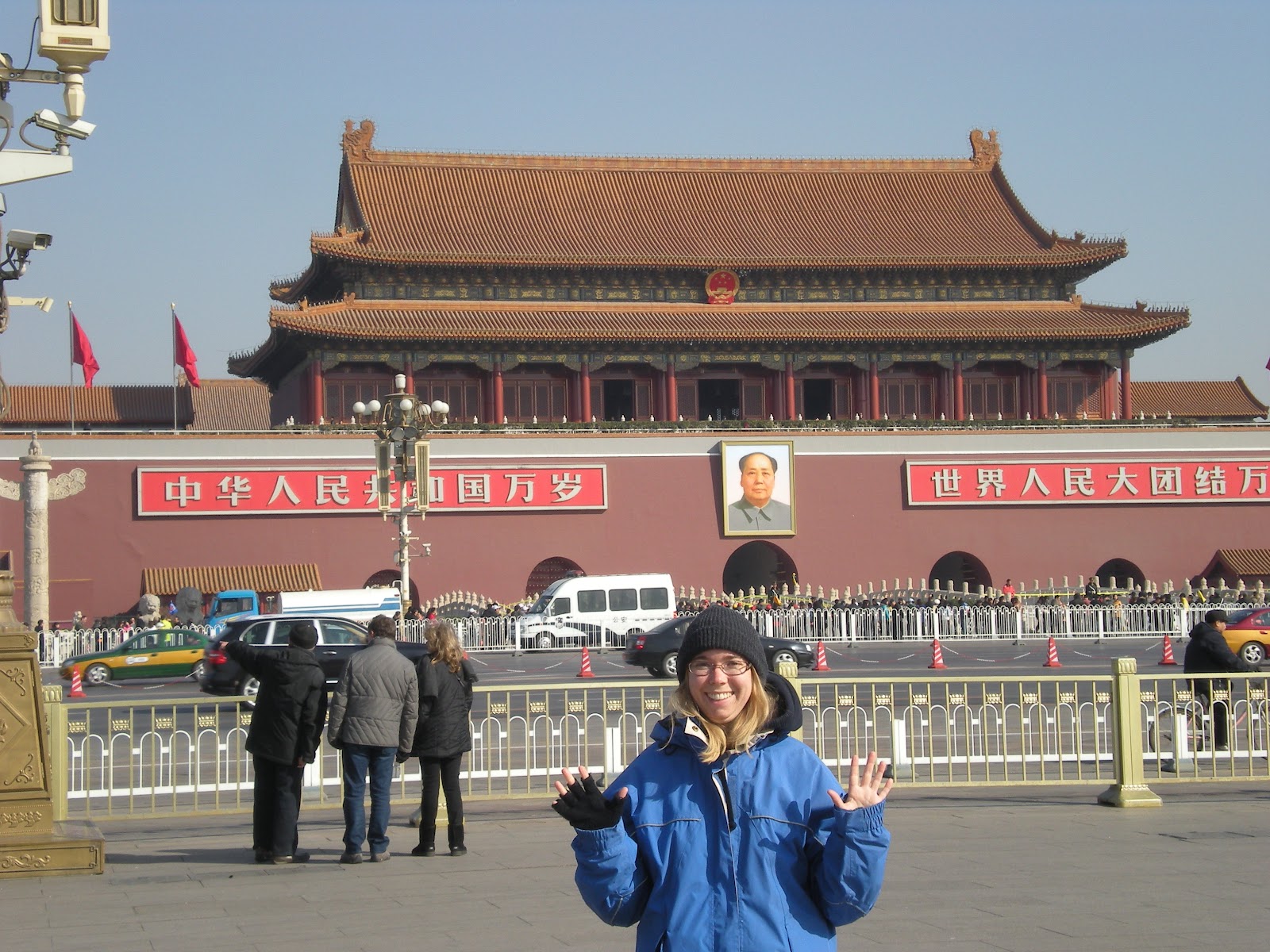
Our first two stops today were Tiananmen square and the Forbidden City. Which, turns out, are right across the street from one another. Literally. When we walked into Tiananmen Square we went past the gate of the old Beijing city wall. On the right was the national museum and on the left was the national congress. I had actually seen on the news that they had held their national congress while we were there and if we had been in Beijing just two weeks prior we wouldn’t have been allowed on the square. In front of us was Chairman Mao’s mausoleum and in back of us, across the street, was the gate that led to the Forbidden City. Chairman Mao’s mausoleum was closed while we were there, but it contains his casket and body. It’s an urban legend whether the body in the casket really is Mao’s or not but during the peak tourist season people will stand in line for up to two hours just to catch a couple seconds glimpse of his tomb.

Chairman Mao's Mausoleum at Tiananmen Square, Beijing

There were guards posted all around the square. They stood tall and straight and didn’t move a muscle. I heard you actually have to be a certain height to get into the national guard there. No short people allowed. Other than the buildings surrounding it, it really was just a big square. It’s famous for being the place Mao delivered his speeches. Across the street on the gate to the Forbidden City hangs a giant painting of Mao, which is replaced by a new one every year.

Gate leading to the Forbidden City

There’s a tunnel under the street connecting the square to the city so we didn’t have to try and cross the traffic. When we first walked through the gate, there was a court yard with rows of rooms on both sides. I thought, this is a little small, I imagined the infamous Forbidden City to be a little bigger. There was another gate in front of us. This was just the reception hall where officials would wait for the emperor. Oh that makes more sense. There were three giant doors in the gate to the next courtyard. The middle one was exclusively for the Emperor. The door on the right was reserved for the royal family and the one on the left was for high ranking officials. Everyone else had to use the little doors on either side. Now in modern days the middle door is for people with disabilities to get through without having to fight the crowd. Our Les was in a wheelchair that day, as he would sometimes use when we were walking a lot so he got to go through the middle door and be Emperor Les for the rest of the day.

The courtyard we walked into was much larger than the first waiting reception one. There was a giant building where all the official business was conducted. Then beyond that courtyard there was another gate that led to an even bigger courtyard that even had a stream running through the middle with bridges and giant stairs. This was where all the official ceremonies took place including religious ceremonies, royal weddings and crowning of the emperor. Okay now I understood why this place was so impressive. After that courtyard it branched off in different directions to smaller buildings and courtyards. I don’t think we explored even half of it to be honest, turned out the forbidden city was actually a huge city at one time. It is reported there are 8,704 rooms in the entire place and housed as many as 10,000 people. Including up to 3,000 concubines.

Courtyard in the Forbidden City

One of the interesting features of the city is that all around everywhere you will see these giant metal pots. They were huge, about five feet high and at least five feet wide in the middle. It was fun to speculate what they were for until we learned they actually held water in case a fire broke out back in the day. There are about 200 of them all around the city. We walked through the main courtyard that once was home to the concubines. We got to look inside the small rooms where they slept and once you became a concubine you never left the forbidden city again. If you had a son you got upgraded to a bigger room and higher status. We wandered around for almost two hours and we only saw a fraction of the city.

We were settling back in on the bus to go to lunch when suddenly Kerry let out a yelp. She had bought a small souvenir from one of the street vendors and the 20 dollar note she had gotten back was a completely different currency! They had warned us about that back in Shanghai that vendors will do that sometimes since other currency that looks similar is worth only a fraction of their own. Honestly we were all too impressed that it had actually happened to be upset and we had a great time trying to figure out what nation it was from.

After lunch we visited the Temple of Heaven. The park was full of old people playing cards which looked like a lot of fun. At first glance I couldn’t quite figure out why the temple of heaven was so special. It wasn’t particularly bigger or taller than anything we’d seen before. Until our guide started explaining the temple was used exclusively by the emperor to pray to the gods every year for a good harvest. Its roof was round instead of square (like every other one we’d seen) and it was painted bright blue to symbolize heaven.  On the stairs leading up the temple were gorgeous carvings of phoenix and dragons. It was a small temple but it was beautiful.

Temple of Heaven, Beijing

On the way back to the hotel we stopped at the site of the 2008 Beijing Olympic games. We walked along the road and tried to imagine thousands of people going to watch the greatest athletes in the world compete. The dorms for the athletes was in the shape of the dragon, complete with its pearl! And we saw the arena infamous for its architecture. It was just a quick stop but very cool to see. 

Dragon dorm rooms at the Beijing Olympic site